
- By stoneguysny
- In Blog
Exterior Stone Cleaning Tips to Improve Your Home’s Curb Appeal
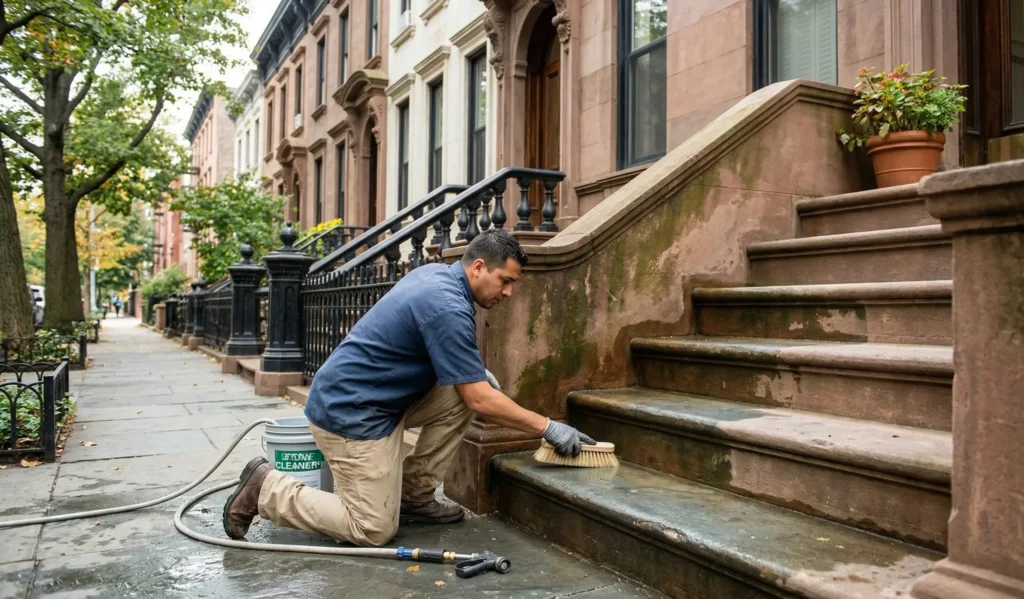
The exterior stone on your home is the first thing visitors, neighbors, and potential buyers see. Front steps, stoops, walkways, patios, and facades set the tone before anyone walks through the door. In New York City, where brownstones, limestone facades, and bluestone sidewalks define entire neighborhoods, that first impression carries real weight.
The problem is that outdoor stone weathers fast. Algae, mildew, pollution residue, hard water stains, and seasonal grime build up gradually until the surface looks permanently aged. The good news: most of it is cleanable, as long as you use the right methods.
Why Exterior Stone Loses Its Appearance Over Time
Outdoor stone faces constant exposure that interior stone never deals with. In NYC specifically, the combination of urban pollution, winter salt, humidity, and freeze-thaw cycles creates a harsh environment for any natural stone surface.
• Algae and mildew: green or black biological growth that bonds to the surface and spreads in shaded or damp areas
• Efflorescence: white, chalky deposits caused by water pulling soluble salts to the surface, common on steps and retaining walls
• Urban grime and soot: airborne pollution that settles into the pores of bluestone, limestone, and sandstone
• Hard water stains: mineral deposits left by rain and sprinklers on stone surfaces
• Winter salt damage: deicing salt residue that etches and discolors stone when left untreated into spring
Note: Each of these requires a different cleaning approach. Using the wrong product on the wrong type of stain can make the problem worse or damage the stone permanently.
Safe Exterior Stone Cleaning Tips by Surface
Before starting any cleaning project, identify your stone type. Bluestone, granite, limestone, slate, and travertine all have different porosity levels and chemical sensitivities.
Front steps and stoops
• Sweep loose debris first and never scrub dry stone
• Apply a pH-neutral stone cleaner diluted in water and scrub with a soft-bristle brush
• Rinse thoroughly and allow to dry completely before foot traffic resumes
• For efflorescence, use a specialized efflorescence remover rather than vinegar or bleach
Walkways and patios
• Remove organic matter such as leaves, moss, and debris before wetting the surface
• For algae or mildew, use a stone-safe biocide, as household bleach will discolor and weaken many stone types
• Work in sections, rinsing each area before moving to the next to avoid product drying on the surface
• Seal patio stone after cleaning to slow future biological growth and staining
Limestone and stone facades
• Facade cleaning requires low-pressure washing or hand application, never high-pressure equipment
• Use alkaline cleaners formulated for masonry, applied with a soft brush or sponge
• Test any product in an inconspicuous area first, as facade stone is often more porous and reactive than floor stone
Common Mistakes That Damage Exterior Stone
This is where most DIY exterior stone cleaning goes wrong. Aggressive methods that seem effective can cause permanent damage.
• Pressure washing at high PSI: blasts open the pores of softer stone types, strips sealant, and can fracture or pit the surface, especially on aged bluestone and limestone
• Using vinegar or acidic cleaners: acidic products etch calcium-based stones like limestone and marble, leaving a rough, dull surface that becomes harder to clean over time
• Wire or stiff synthetic brushes: scratch the surface and create micro-abrasions that trap more dirt
• Skipping the rinse: cleaning products left to dry on stone leave residue that attracts grime and causes discoloration
• Applying sealant to a dirty or wet surface: traps contaminants underneath and prevents proper bonding
Rule: If you would not use a product on interior marble, think twice before applying it to exterior stone. Outdoor stone is more porous and often more vulnerable, not less.
When Professional Exterior Stone Cleaning Makes the Difference
Some exterior stone conditions go beyond what safe DIY methods can address effectively:
• Deep-set biological staining from black algae or lichen that has bonded to the surface over multiple seasons
• Widespread efflorescence on steps or facades that returns after cleaning
• Stone previously damaged by pressure washing or acid products, now showing an uneven or rough texture
• Pre-sale preparation where the goal is a visible transformation, not just routine upkeep
• Historic brownstones and landmark buildings where the wrong approach can conflict with preservation guidelines
Key difference: Professional exterior stone cleaning uses low-pressure, high-volume equipment with stone-specific detergents. It removes years of buildup without the surface damage risk that comes with consumer pressure washers.
Exterior Stone Cleaning and Restoration in NYC
Stone Guys NY provides professional exterior stone cleaning, stain removal, and sealing for front steps, stoops, walkways, patios, and facades throughout Manhattan, Brooklyn, Queens, and the greater NYC metro area. Whether you are preparing a home for sale, restoring a brownstone to its original appearance, or simply maintaining a property you take pride in, our team delivers results that routine cleaning cannot match.
• Free on-site estimates
• In-house team only, no subcontractors
• Available 24/7 | OSHA-certified | Satisfaction guaranteed
For cold-weather stone care, read our guide on winter care tips for outdoor stone structures. And if your home’s interior stone needs attention too, see why NYC homes need professional stone care. Contact us today for a free estimate.


LEAVE A COMMENT