
- By Escala SEO
- In Blog
Marble Floor Polishing vs. Marble Restoration: What’s the Difference?
When homeowners in NYC notice that their marble floors have lost their appeal, the first question is usually: do I need polishing or restoration? The two terms are often used interchangeably, but they describe very different levels of service with different results, timelines, and costs.
Choosing the wrong service can mean paying for work that does not fully address the problem, or investing in a light treatment when the floor actually needs more comprehensive repair. This guide explains the difference clearly so you can make an informed decision before contacting a professional.
What Is Marble Floor Polishing?
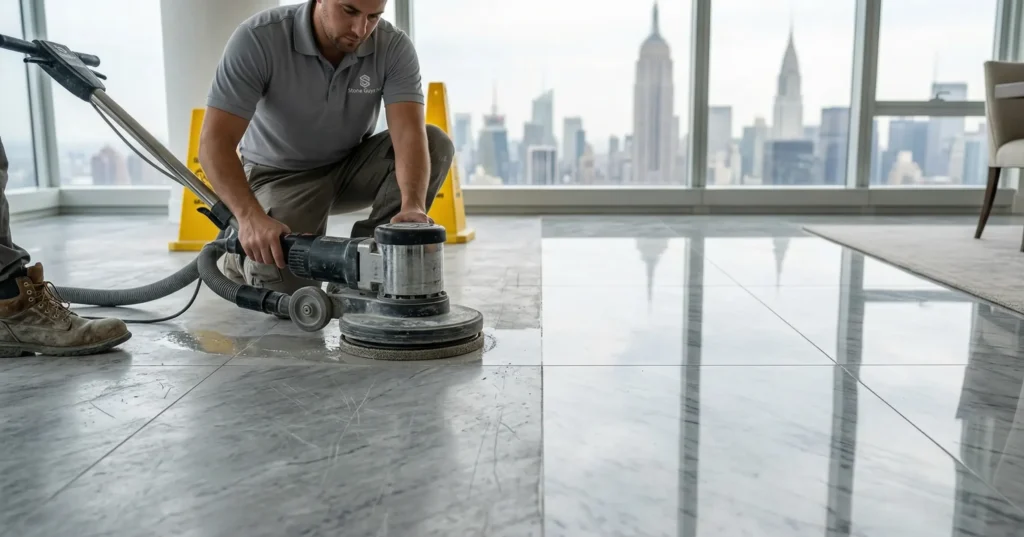
Polishing is a surface-level treatment that restores gloss and removes minor imperfections from the top layer of the stone. It uses progressively finer diamond abrasives and polishing compounds to bring back the reflective finish that wear and time have degraded.
Polishing is the right service when the marble has:
• Lost its shine or reflectivity in high-traffic areas
• A dull or hazy appearance that does not respond to regular cleaning
• Light surface scratches or minor abrasion visible only in certain lighting
• Mild wear patterns in foyers, hallways, or living areas
Important: Polishing improves what is already there. It does not remove deep damage, fill cracks, or fix significant etching. If the floor has structural or subsurface issues, polishing alone will not deliver a lasting result.
What Is Marble Floor Restoration?
Restoration is a multi-step process that addresses damage beyond what polishing can correct. It typically involves honing, which is a more aggressive grinding process that removes a thin layer of the stone to eliminate deep scratches, etching, and surface irregularities, followed by polishing to rebuild the finish.
Restoration is the right service when the marble has:
• Etching from acid exposure, appearing as dull patches that polishing cannot remove
• Deep scratches, gouges, or abrasions visible in normal lighting
• Lippage, meaning uneven tile edges that create a rough or uneven surface
• Chips, cracks, or areas of physical damage that need repair before finishing
• Widespread staining that has penetrated below the surface layer
• A surface that has been previously over-polished or treated with improper products
Key point: Restoration resets the surface. It removes the damaged layer and rebuilds from a clean base, which means the results are more durable and more complete than polishing alone can achieve.
Polishing vs. Restoration: Side-by-Side Comparison
| Marble Polishing | Marble Restoration | |
| What it does | Restores gloss and removes minor surface wear | Removes deep damage and rebuilds the surface from a clean base |
| Best for | Dull finish, light scratches, mild wear patterns | Etching, deep scratches, lippage, chips, widespread staining |
| Intervention level | Light to moderate | Moderate to intensive |
| Process includes | Diamond abrasive buffing and polishing compound | Honing, crack and chip repair, stain removal, then polishing |
| Expected result | Restored shine and surface uniformity | Fully reset surface with corrected damage and lasting finish |
| When to schedule | Every 1 to 3 years as preventive maintenance | When damage is visible and polishing alone will not resolve it |
How to Know Which Service You Need
A professional assessment is always the most reliable way to determine the right course of action. But there are some practical indicators you can evaluate on your own before scheduling a visit:
• Run your hand across the surface in a problem area. If it feels smooth but looks dull, polishing is likely sufficient. If it feels rough, uneven, or pitted, restoration is probably needed.
• Look at dull spots in raking light. If they appear flat and uniform, the shine has worn down and polishing can restore it. If the spots look frosted, textured, or slightly recessed, that is etching and requires restoration.
• Check for scratches in direct sunlight. Fine hairlines that are barely visible often respond to polishing. Deep scratches with visible edges or depth need honing before polishing.
• Look at grout lines and tile edges. Significant lippage or grout deterioration is a sign that more comprehensive work is needed beyond surface polishing.
Bottom line: When in doubt, start with a free professional assessment. A qualified technician can tell you within minutes whether polishing will solve the problem or whether restoration is the better investment.
Marble Polishing and Restoration Services in NYC
Stone Guys NY provides both marble floor polishing and full marble restoration services across Manhattan, Brooklyn, Queens, and the greater NYC metro area. Our team assesses each floor individually and recommends only what the surface actually needs, whether that is a routine polish or a complete restoration process.
• Free on-site estimates with honest recommendations
• In-house team only, no subcontractors
• Available 24/7 | OSHA-certified | Satisfaction guaranteed
Explore our full range of marble restoration services in NYC or read our detailed guide on marble floor polishing and how it restores shine and elegance. Contact us today for a free assessment and get the right recommendation for your floors.


LEAVE A COMMENT