
- By Escala SEO
- In Blog
The Expert Guide to Sealing Granite Countertops in NYC
Your granite countertop isn’t just a surface; it’s the centerpiece of your kitchen. Whether it’s a sleek, modern slab in a Manhattan high-rise or a classic, veined beauty in a Westchester County home, it’s a significant investment.
The most common question we get at Stone Guys NY is: “Do I really need to seal my granite?”
The short answer is yes, almost always. But the why and how are what separate a protected investment from a costly restoration project. As the Tri-State’s leading stone care experts, let’s break down everything you need to know about sealing granite.
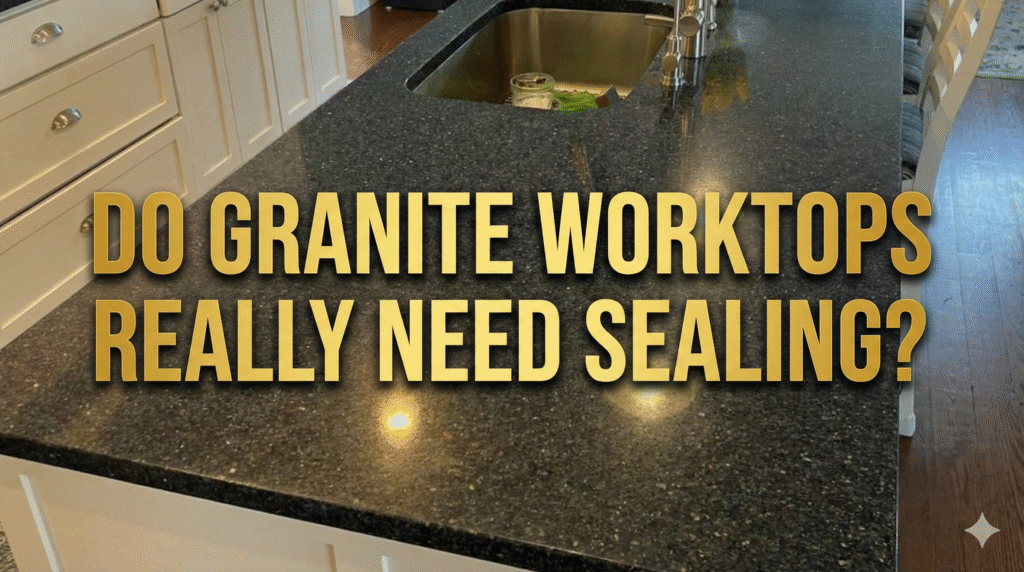
Do Granite Worktops Need Sealing? The Porosity Problem
Many people believe granite is indestructible. While it’s incredibly durable, most granite is a natural, porous stone. “Porous” simply means it has tiny, microscopic holes. What does this mean for your kitchen in Brooklyn or Hoboken, NJ?
- Spills: Red wine, coffee, or cooking oil can seep into those pores, creating a deep, stubborn stain.
- Etching: Acidic substances can react with the minerals in the stone, creating dull spots called “etches.”
- Bacteria: Pores can become a breeding ground for bacteria if not properly cleaned and sealed.
A high-quality impregnating sealer acts as a protective shield. It doesn’t sit on top of the stone; it absorbs into the pores and bonds with the granite, repelling liquids before they can soak in. Not sure if your seal is working? The Water Test is a simple way to check: spill a small puddle of water; if it beads up, your seal is strong.
How Do Professionals Seal Granite? (And Why It’s Not a DIY Job)
You’ve seen the DIY sealing kits at the hardware store. While tempting, they often lead to more problems than they solve. This addresses two questions: “Is it better to seal granite myself?” and “How do professionals seal granite?“
The DIY Pitfall: Most store-bought sealers are “topical” or “top-coats.” They sit on the surface like a coat of wax, which will quickly dull, peel, and flake. Our professional process is about restoration and protection, not just application:
- Deep Cleaning & Stripping: We remove all dirt, grime, and old, failing sealers using pH-neutral products.
- Surface Preparation: Minor polishing or honing ensures the stone is pristine.
- Professional-Grade Impregnating Sealer: We select a premium, solvent-based sealer matched to your granite’s specific density.
- Controlled Application & Buffing: Meticulous application ensures 100% coverage without leaving a hazy residue.
“Best” vs. “Permanent” Sealers: The Truth
What is the best sealer for granite countertops? The “best” is an impregnating sealer. It works below the surface, allows the stone to “breathe,” and won’t change the finish. Regarding “permanent” sealers: in our 15+ years of experience, they are a myth. Friction and daily use will eventually wear any sealer down, requiring periodic maintenance.
What Happens If You Don’t Seal Granite?
This is the big one: “What happens if you never seal it?” Without protection, you face stubborn stains and dullness. Eventually, unsealed granite needs intensive restoration, involving diamond honing and deep poulticing, which is far more expensive than preventative natural stone care.
Is It Okay to Put Hot Pans on Granite?
We strongly advise you to never put a hot pan directly on your granite. While the stone is heat-resistant, the sealer is not. A 500°F pan will burn off the sealer instantly. Always use a trivet to protect both your stone and your sealer.
Trust Your Stone to the Tri-State’s Experts
Sealing granite isn’t an “extra”—it’s the single most important step in protecting your stone. If your counters look dull or are absorbing water, don’t wait for a stain to set in. Contact Stone Guys NY today for a consultation.


