
- By Escala SEO
- In Blog
Stone Grout Restoration: Cleaner Tile, Healthier Spaces
You scrub the shower every week. You mop the kitchen floor twice. You use a cleaner that promises to cut through grime and leave tiles sparkling. And yet — the floor still looks dirty. The shower still looks dull. Something about the surface feels perpetually grimy no matter how much effort goes into cleaning it.
In most cases, the stone tile itself is not the problem. The grout is.
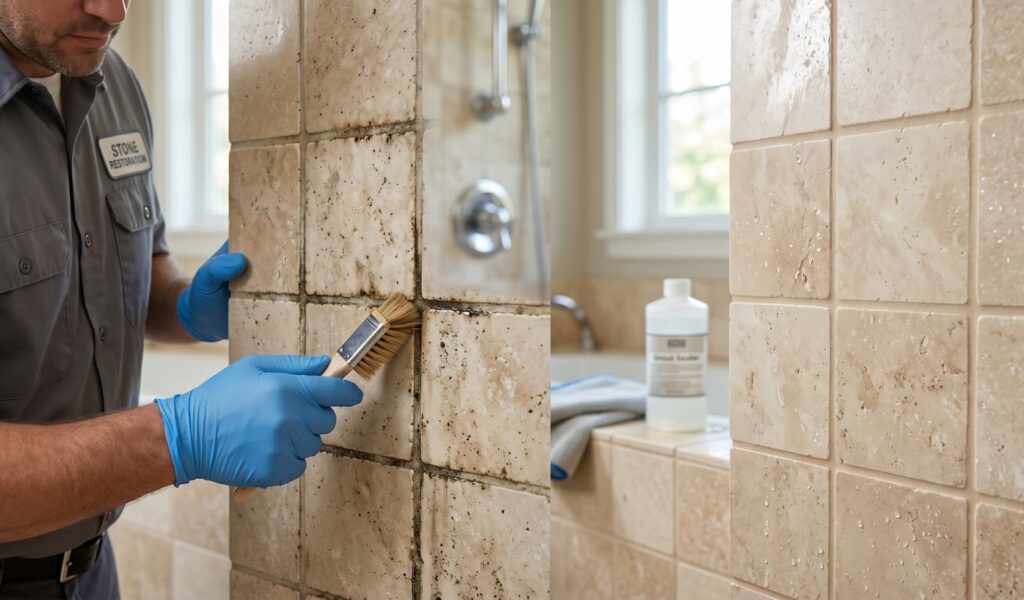
Grout lines are the hidden weak point of almost every natural stone installation. They are more porous and textured than the stone around them, which means they absorb everything — soil, soap residue, body oils, mildew, hard water minerals, and cleaning product film — at a rate that even regular scrubbing cannot keep pace with. Over time, the grout becomes so embedded with buildup that the entire surface looks neglected, regardless of how clean the stone tiles themselves actually are.
Professional stone grout restoration addresses this at the source. It is not a cosmetic shortcut — it is a systematic process that removes what routine cleaning leaves behind, repairs what has been damaged, and protects what has been restored. The result is a floor, shower, or bathroom that finally looks as clean as the effort put into maintaining it.
What Is Stone Grout Restoration?
Stone grout restoration is a professional service that addresses the condition of grout lines in natural stone tile installations — including marble, travertine, limestone, slate, and other stone surfaces found in residential bathrooms, kitchens, lobbies, and commercial spaces.
It encompasses a range of work depending on what the grout requires:
- Deep cleaning to remove embedded soil, soap scum, mineral deposits, body oils, and biological growth that surface cleaning cannot reach
- Mildew and mold treatment using stone-safe products that neutralize organic growth at the source rather than simply bleaching the surface
- Stain removal targeting specific discoloration from hard water, grease, cleaning product residue, or other contaminants
- Grout repair addressing cracks, gaps, crumbling areas, or sections where grout has been lost entirely
- Sealing to reduce the porosity of the grout and make future maintenance more effective
- Surface improvement that considers the condition of both the grout and the surrounding stone as a unified system
The distinction between standard cleaning and professional restoration matters because grout in a natural stone installation cannot be treated the same way as grout around ceramic or porcelain tile. The stone around it is sensitive to acids, harsh chemicals, and abrasive tools — which means the products and techniques used on the grout have to be safe for the stone as well.
Why Grout Gets Dirty Faster Than Stone
Understanding why grout accumulates grime so much faster than the surrounding stone helps explain why standard cleaning routines eventually stop working.
Grout is a cement-based material — porous, slightly rough in texture, and not naturally resistant to absorption. In contrast, a polished or honed stone tile presents a much smoother, denser surface that resists the adhesion of contaminants. What slides off a marble tile or sits briefly on a travertine surface gets absorbed immediately into the unsealed grout joint next to it.
The most common contributors to grout discoloration include:
Soap scum and body oils — In showers and bathroom floors, the combination of soap, shampoo, conditioner, and body wash creates a sticky film that bonds to porous grout and builds up layer by layer with every shower. This film is not visible on its own, but it attracts and holds everything else that comes along.
Mildew and biological growth — The same warm, moist environment that makes a shower comfortable also makes grout an ideal habitat for mold and mildew. Grout’s texture and porosity give organic growth somewhere to anchor, which is why mildew reappears within days of surface-level cleaning — the root of the problem is inside the grout, not on its surface.
Hard water mineral deposits — In New York City, tap water contains dissolved calcium and magnesium that leave white or gray mineral buildup wherever water evaporates regularly. Grout lines around showerheads, faucets, and drains accumulate these deposits rapidly.
Cleaning product residue — Many household cleaners, particularly those with surfactants or fragrances, leave a film on grout that attracts and holds soil. The floor looks clean immediately after mopping but grays out quickly because the residue from the cleaner is working against the cleaning effort.
Kitchen grease and food oils — Grout in kitchen floors near cooking areas absorbs airborne grease particles over time. This type of buildup is particularly difficult to remove because it polymerizes — essentially baking onto the grout surface — and becomes resistant to standard water-based cleaners.
Foot traffic grime — In entryways and lobby floors, soil and abrasive particles tracked in from outside grind into grout lines with every step. High-traffic patterns are often visible as darker lines running through the floor.
Signs Your Grout Needs Professional Restoration
Some of these signs are visual; others become apparent only when routine cleaning no longer produces the expected result.
- Grout lines are darker than they should be — gray or brown grout that was once white, or black grout lines that have become nearly invisible against dark tile
- Uneven color across the grout — some sections are visibly darker or stained compared to others, making the floor or wall look patchy
- Mold or mildew that keeps returning — surface treatment temporarily improves the appearance but the discoloration reappears within days or weeks
- Cracking or crumbling grout — particularly in wet areas, grout that has deteriorated structurally allows moisture to penetrate behind the tile
- Missing grout — gaps or voids in the grout lines are both an aesthetic problem and a moisture management problem
- Persistent odor in the bathroom or kitchen that does not resolve with regular cleaning — often a sign of mildew embedded in grout rather than surface-level contamination
- Shower walls or floors that look dirty immediately after cleaning — a clear sign that the issue is inside the grout rather than on the surface
- Stone floors with visible traffic patterns — dark pathways through the floor that correspond to walking patterns, even after mopping
If several of these apply to your installation, professional restoration is likely to produce a dramatically better result than continuing with intensified routine cleaning. You can see real examples of what professional grout and stone restoration achieves in Stone Guys NY’s before-and-after gallery.
Grout Cleaning vs. Grout Repair vs. Grout Restoration
These three terms are sometimes used interchangeably, but they describe meaningfully different scopes of work — and understanding the distinction helps set accurate expectations.
Grout cleaning is the removal of surface-level and embedded contamination — soil, soap scum, mildew, hard water deposits, and residue — without altering or repairing the grout itself. It improves the appearance and hygiene of the installation but does not address structural deterioration. Regular professional cleaning is a maintenance task that keeps grout in good condition; it is not a substitute for restoration when more significant problems are present.
Grout repair addresses physical damage — cracks, gaps, crumbling sections, or areas where grout has been lost. It may involve removing deteriorated grout and replacing it with new material, or filling voids and cracks where the existing grout structure has failed. Repair is a structural intervention, not just a cleaning task.
Grout restoration is the comprehensive approach that may combine cleaning, mildew treatment, stain removal, repair, and sealing — addressing both the appearance and the condition of the grout as a complete system. For grout that has accumulated significant buildup or damage over time, restoration is what returns it to a condition that can then be maintained effectively going forward.
Why DIY Scrubbing Can Damage Natural Stone
This is a critical point for anyone with natural stone tile: the aggressive approach that works on ceramic tile can cause real and lasting damage to marble, travertine, limestone, or slate.
The most common DIY mistakes that damage stone while attempting to clean grout include:
Acidic cleaners — Vinegar, lemon-based cleaners, many bathroom tile sprays, and grout cleaners containing hydrochloric or phosphoric acid will etch marble, limestone, and travertine on contact. Even brief exposure to the stone surface while targeting the grout is enough to cause permanent dullness.
Bleach-heavy routines — While bleach can temporarily improve the appearance of mildew-stained grout, it does not remove the mildew at its root, it can weaken grout over time, and it can cause discoloration on certain natural stones.
Abrasive brushes and pads — Stiff wire brushes or abrasive scrub pads that are appropriate for ceramic tile can scratch polished or honed stone surfaces, permanently altering the finish.
Steam cleaners at high pressure — While steam can be effective for some grout cleaning applications, high-pressure steam directed at grout joints in a stone installation can force moisture into gaps and behind the tile, or damage the stone surface if applied incorrectly.
Stone Guys NY’s detailed resource on the dos and don’ts of stone cleaning covers the full picture of what is safe and what to avoid on natural stone surfaces — and is worth reading before reaching for any cleaning product on a stone tile installation.
Professional Stone Grout Restoration Process
Professional grout restoration in a natural stone installation requires a disciplined approach that protects the stone throughout the process while achieving thorough results on the grout.
1. Inspection of stone and grout Before any product is applied, the technician assesses the type of stone, current grout condition, presence of mold or mildew, evidence of moisture damage, any structural issues, and the current state of any sealer on the stone or grout.
2. Stone-safe pre-treatment A pH-neutral or alkaline pre-treatment product appropriate for the stone type is applied to loosen and break down surface and embedded contamination without introducing acid to the stone surface.
3. Deep cleaning Using professional equipment — including appropriate brushes and extraction tools — embedded soil, soap scum, grease, and mineral deposits are removed from the grout lines. This goes well beyond what manual scrubbing with a consumer brush can achieve.
4. Mildew and buildup treatment Where biological growth is present, stone-safe biocidal products are applied to neutralize mold and mildew at the root rather than just bleaching the surface discoloration.
5. Grout repair where needed Cracks, gaps, and structurally compromised sections are addressed with appropriate repair materials before sealing. Sealing damaged grout without first repairing it traps the damage rather than resolving it.
6. Rinse and dry The installation is thoroughly rinsed to remove all cleaning products and residue, then allowed to dry fully before any sealer is applied.
7. Optional grout sealing A penetrating grout sealer can be applied to reduce the porosity of the grout and make future maintenance more effective. Sealed grout does not become stain-proof, but it resists absorption significantly better than unsealed grout and releases contamination more easily during routine cleaning.
8. Maintenance plan After restoration, the Stone Guys NY team provides specific guidance on appropriate cleaners, ventilation habits, and the recommended interval for follow-up professional maintenance.
Best Areas for Grout Restoration
Professional grout restoration delivers visible, lasting results in virtually every natural stone tile application — from intimate residential bathrooms to large commercial installations.
Showers and shower walls — where soap scum, body oils, and mildew create the most persistent grout challenges; often the highest-impact application for grout restoration
Bathroom floors — subject to moisture, bare foot traffic, and cleaning product buildup, often showing grout discoloration well before the tile itself shows any wear
Kitchen floors — particularly near cooking areas where grease and food residue accumulate in grout lines over time
Entryways and foyers — high-traffic areas where soil and abrasive particles from outside become embedded in grout and create visible traffic patterns
Lobby stone tile — in NYC commercial buildings, lobby floors with natural stone tile often require grout restoration as part of a comprehensive stone floor maintenance program
Spa and wellness areas — where hygiene is paramount and grout cleanliness is both an aesthetic and health concern
Hotel bathrooms — subject to intensive daily use and frequent cleaning with products that may not be stone-safe; grout restoration is often part of property refresh projects and room renovations
Rental turnovers — landlords and property managers preparing units for new tenants frequently commission grout restoration alongside other stone services to present bathrooms and kitchens in the best possible condition
How to Keep Grout Cleaner After Restoration
Professional restoration is the reset — the right maintenance habits are what extend the results and reduce how frequently restoration is needed.
- Improve ventilation — run the bathroom exhaust fan during and for at least 20 minutes after every shower; this dramatically reduces the moisture levels that support mildew growth in grout
- Dry shower walls after use — a squeegee takes 30 seconds and removes the vast majority of the water and soap residue that would otherwise sit on grout lines and accumulate
- Use only pH-neutral stone-safe cleaners — products formulated for natural stone are safe for both the tile and the grout, and they do not leave the surfactant residue that attracts and holds grime
- Avoid soap bars in stone showers — liquid body wash produces far less soap scum buildup on grout than bar soap
- Address spot issues quickly — a grout line that begins to discolor is much easier to address early than after months of additional buildup have compounded the problem
- Schedule regular professional maintenance for commercial spaces — high-use environments like hotel bathrooms, gym facilities, and spa areas benefit from professional grout cleaning on a regular cycle, which prevents the buildup from reaching a level that requires full restoration
Frequently Asked Questions About Stone Grout Restoration
Can professional cleaning remove mold from grout? Yes, in most cases. Professional grout cleaning uses stone-safe biocidal products that address mold and mildew at the source — not just the surface staining. For grout where mold has deeply penetrated or where structural deterioration has created conditions that support recurring growth, grout repair or replacement of the affected sections may be needed alongside cleaning.
Should grout around natural stone be sealed? Yes, in most applications. Grout sealing significantly reduces the porosity of the grout, making it more resistant to staining and easier to clean. Sealing should always follow professional cleaning — applying sealer over dirty or contaminated grout locks in the problems rather than solving them.
Why does my grout look dirty after mopping? This is almost always caused by one of two things: cleaning product residue that attracts and holds soil, or embedded contamination inside the grout that surface mopping cannot reach. If the grout looks acceptable immediately after mopping but quickly grays out again, the issue is likely residue from the cleaner itself. If it looks dirty even immediately after mopping, the contamination is embedded and requires professional deep cleaning.
Can cracked grout be repaired without replacing all the tile? In most cases, yes. Cracked or missing grout can be repaired by removing the deteriorated material and applying new grout in the affected areas. When the repair is done with a well-matched grout product and blended carefully, it is generally not visible in the finished result. Full tile removal is typically only necessary when moisture has penetrated behind the tile and caused damage to the substrate.
Is grout restoration safe for marble, travertine, and limestone? Yes — when performed by a professional who selects products appropriate for calcium carbonate stones. The critical factor is ensuring that no acidic products make contact with the stone during the grout cleaning process. Stone Guys NY’s team is experienced in grout restoration across all natural stone types and uses only stone-safe products and techniques throughout.
Make Your Stone Surfaces Look Clean Again
Grout is what ties a stone tile installation together — visually and structurally. When the grout is stained, moldy, or deteriorating, even beautiful stone looks neglected. Professional grout restoration addresses what routine cleaning cannot: the embedded buildup, the biological growth, the structural damage, and the missing protection that allows problems to keep recurring.
Stone Guys NY has helped homeowners, landlords, property managers, and commercial clients across New York City restore stone tile installations to a clean, consistent, well-maintained appearance. Learn more about the Stone Guys NY approach to stone care and what professional restoration can do for your space.
Ready to make your stone floors, showers, and bathrooms look clean again? Contact Stone Guys NY for professional stone grout restoration services throughout Manhattan, Brooklyn, Queens, the Bronx, and beyond.


LEAVE A COMMENT