
- By stoneguysny
- In Blog
Marble Lobby Maintenance: What NYC Building Managers Need to Know
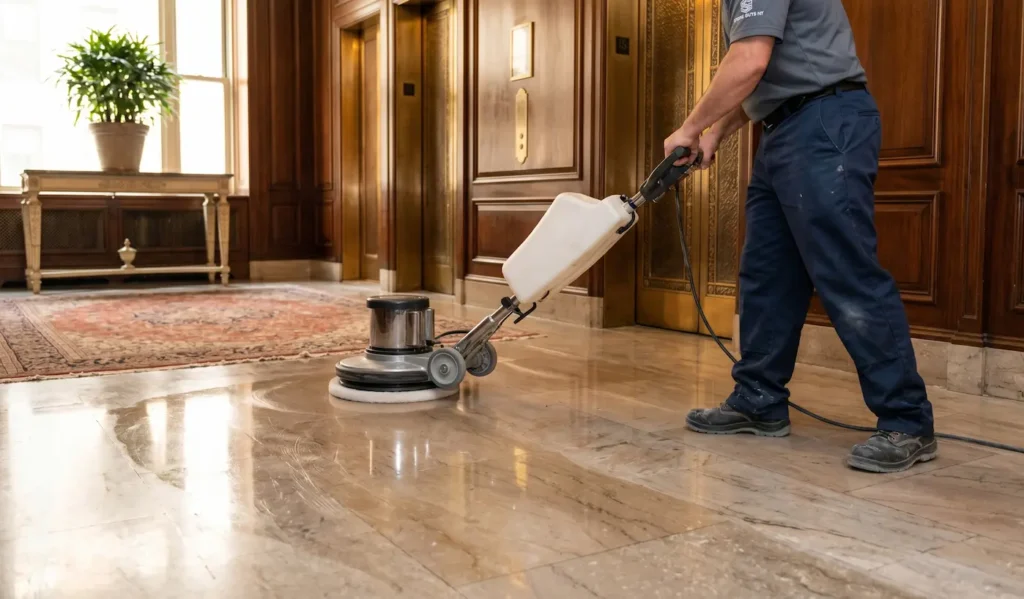
Every building manager in New York City knows that first impressions matter. Before a prospective tenant ever rides the elevator, reviews a lease, or shakes anyone’s hand, they walk through your lobby. And if the marble floor is dull, scratched, or stained, that impression has already been set — and it isn’t a good one.
Marble lobbies are one of the defining features of NYC’s residential and commercial buildings, from pre-war co-ops on the Upper West Side to modern high-rises in Long Island City. But managing a marble lobby is not the same as managing a marble kitchen countertop. The scale is different. The traffic is different. And the consequences of neglect are far more visible — and far more expensive.
This guide is written for building managers, property supervisors, and co-op and condo board members who want a clearer picture of what proper lobby marble maintenance looks like, what mistakes to avoid, and when professional intervention is necessary.
Why Lobby Marble Degrades Faster Than Residential Stone
Marble in a private residence gets daily foot traffic from a handful of people. Marble in a building lobby gets foot traffic from dozens, sometimes hundreds of residents and visitors every single day — plus delivery personnel, movers, cleaning crews, and service workers.
That constant friction is the primary driver of wear. The crystalline surface of polished marble gets microscopic scratches from grit and debris carried in on shoes. Over time, those scratches accumulate and the floor loses its reflective finish, taking on a hazy, matte appearance. This is called traffic abrasion, and it is the single most common complaint we hear from building managers across NYC.
But abrasion is only one part of the problem. Lobbies also contend with:
- Salt and sand tracked in during winter months, which act as abrasives and can cause deep surface damage when worked into the stone by foot traffic
- Moisture from wet shoes and umbrellas, which penetrates the stone’s pores and can lead to discoloration and sub-surface staining
- Cleaning products used by building maintenance staff that are too acidic or alkaline for marble, causing chemical etching over time
- Hard water streaks and residue left behind by mopping with unfiltered water
- Rolling luggage, hand trucks, and dollies, which cause linear scratches and edge chips near elevator banks and entrance areas
In short, a lobby marble floor faces conditions that are categorically more demanding than any residential application. Managing it requires a different level of knowledge and a different service frequency.
The Most Common Damage Patterns in NYC Building Lobbies
After years of working in residential and commercial buildings across Manhattan, Brooklyn, Queens, and the Bronx, our team at Stone Guys NY consistently sees the same damage patterns in lobbies that have been under-maintained:
1. General surface dullness and loss of shine The most widespread issue. Polished marble develops a high-gloss finish through mechanical abrasion and crystallization during professional treatment. Without periodic re-polishing, that finish degrades and the floor looks tired, even when it is otherwise clean.
2. Etching near entrance areas The zone within six to ten feet of the front door is the most vulnerable. Salt, cleaning chemicals, and reactive substances brought in from outside cause chemical etching — white or dull spots that don’t respond to regular cleaning because the damage is in the stone itself, not on top of it.
3. Scratching near elevator banks Luggage wheels, appliance dollies, and moving equipment cause linear scratches that concentrate in front of elevator doors. This area often looks significantly worse than the rest of the lobby because of the high-load equipment that passes through regularly.
4. Grout discoloration and deterioration The grout lines between marble tiles are often the first thing to show neglect. Foot traffic works debris into grout over time, and improper cleaning can stain it permanently. Deteriorated grout is also a structural issue — it can allow water infiltration that damages the stone from below.
5. Staining near concierge desks and mail areas Coffee, food, and beverage spills in high-activity zones leave stains if they aren’t addressed immediately and correctly. Marble is porous and absorbs liquids rapidly, especially in older, unsealed floors.
Understanding your building’s specific damage profile is the first step toward building an effective maintenance plan. If you’re not sure what condition your lobby is in, a professional marble restoration assessment is a low-cost starting point that gives you a clear picture before any damage compounds further.
📞 Ready to Protect Your Building’s First Impression?
Stone Guys NY works with building managers and property owners across NYC to develop customized maintenance plans for lobbies, corridors, and common areas. Get a free building assessment and find out exactly what your marble needs.
Contact Stone Guys NY for a Free Estimate →
What a Professional Maintenance Schedule Looks Like
One of the most common mistakes building managers make is treating marble maintenance as an emergency service rather than a scheduled one. The result is a cycle of visible deterioration followed by expensive restoration — when a proactive maintenance schedule would cost significantly less over time and keep the lobby looking consistently excellent.
A professional stone maintenance schedule for a high-traffic NYC building lobby typically looks like this:
Monthly or Bi-Monthly: Professional cleaning and inspection A trained stone technician visits to perform a deep clean using pH-neutral, stone-safe products, inspect the surface for early-stage damage, and document any areas of concern. This is not the same as what your cleaning crew does — it involves specialized equipment and stone-specific cleaning agents that don’t leave residue or cause micro-damage.
Every 6 to 12 Months: Re-polishing and re-sealing Depending on traffic volume, marble in a busy building lobby will need to be re-polished every six to twelve months to restore its shine and even out surface wear. Re-sealing should follow polishing to close the stone’s pores and protect against future staining.
As Needed: Spot treatment and minor repairs Etching, staining, and minor chips should be addressed as soon as they’re identified, before the damage spreads. A well-maintained relationship with a stone care provider means you can get a technician on-site quickly when something requires attention.
Every 2 to 5 Years: Full restoration if needed Even with consistent maintenance, some lobbies will eventually require a more intensive restoration — re-grinding and re-honing the surface to address accumulated wear that polishing alone cannot correct. This is significantly more affordable and less disruptive when the floor has been maintained regularly in between.
What You Should Tell Your Cleaning Staff
Your in-house cleaning team is not the problem — but without proper guidance, they can inadvertently cause real damage to marble surfaces. The most important instructions to communicate to any cleaning contractor working in a marble lobby:
Never use vinegar, bleach, or generic all-purpose cleaners on marble. These products are acidic or caustic and will etch the surface over time. Even products marketed as “stone cleaners” at hardware stores are frequently inappropriate for polished marble.
Avoid steam mops. The heat and moisture combination can open the stone’s pores and drive contaminants into the surface, leading to staining that is difficult to reverse.
Use two-bucket mopping systems with pH-neutral stone cleaners. One bucket with the cleaning solution, one with clean rinse water. Never let dirty mop water sit on the marble.
Do not use abrasive pads or rough brushes on marble floors. Even pads labeled “non-scratch” may be too abrasive for polished marble and can dull the finish over time.
Dry the floor promptly after mopping. Standing water on marble — especially near grout lines — contributes to discoloration and can work its way under the stone.
If your building has recently switched cleaning contractors and you’ve noticed changes in the floor’s appearance, it may be worth having a stone professional evaluate whether cleaning-related damage has occurred. This is more common than most building managers realize, and the good news is that in most cases it’s correctable.
When to Call a Professional vs. Handle It In-House
Building staff can handle daily dry sweeping, light damp mopping with approved products, and immediate blotting of spills. These tasks keep the surface clean and reduce the accumulation of grit and debris.
Everything else — re-polishing, sealing, stain removal, grout repair, chip filling, etch treatment — requires a trained stone restoration technician. Attempting these tasks without the proper equipment and products typically makes the problem worse and turns a minor issue into a major one.
Signs that you need to call a professional immediately:
- The floor looks hazy or dull even immediately after cleaning
- There are white or gray spots that don’t clean off (etching)
- Grout lines are darkened, crumbling, or recessed
- There are visible scratches or linear marks in the stone
- The floor shows discoloration in localized areas (staining)
- You can see chips or cracks near edges or in high-traffic areas
For ongoing care, it’s worth formalizing the relationship with a stone restoration company that understands the specific demands of commercial and residential building environments. A standing service agreement ensures consistent results, documented condition history, and priority response when something needs attention.
Learn more about the difference between marble polishing and full marble restoration to better understand what level of service your lobby currently needs.
Protecting the Investment in Your Building’s Common Areas
A marble lobby is a significant capital asset. Replacing marble flooring in a large NYC building lobby is not a minor renovation — it is a project that costs tens of thousands of dollars, disrupts building operations, and is visible to every resident and visitor for months.
Preventive maintenance is not just about aesthetics. It is about protecting the building’s value, meeting resident expectations, and avoiding the far more disruptive and expensive process of full replacement or major restoration.
Buildings that invest in regular stone maintenance consistently outperform comparable buildings in tenant satisfaction surveys and property appraisals. A lobby that looks well-maintained signals management that is attentive and a building that is properly cared for — and that matters in NYC’s competitive real estate environment.
For building managers who want to explore what a comprehensive stone care plan would look like for their property, our team is available for on-site assessments across all five boroughs and Westchester. We work with residential co-ops, condos, commercial office buildings, and hospitality properties — and we understand the scheduling, communication, and documentation requirements that come with managing a multi-unit building.
If you’re also managing limestone surfaces in your building’s lobby or corridors, the maintenance principles are similar but the products and techniques require adjustments specific to limestone’s higher sensitivity to acids and cleaning agents.
📋 Get a Free Lobby Assessment
Our team has worked in building lobbies across Manhattan, Brooklyn, Queens, the Bronx, Staten Island, and Westchester. We know what NYC lobbies need — and we can tell you exactly what yours needs after a single on-site visit.
No commitment. No pressure. Just a clear picture of your building’s stone condition and a realistic plan to protect it.
Schedule Your Free Building Assessment with Stone Guys NY →
Stone Guys NY specializes in marble, limestone, granite, travertine, terrazzo, bluestone, and engineered stone restoration and maintenance for residential and commercial properties across New York City. Contact us at (888) 786-6369 or info@StoneGuysNY.com.


LEAVE A COMMENT